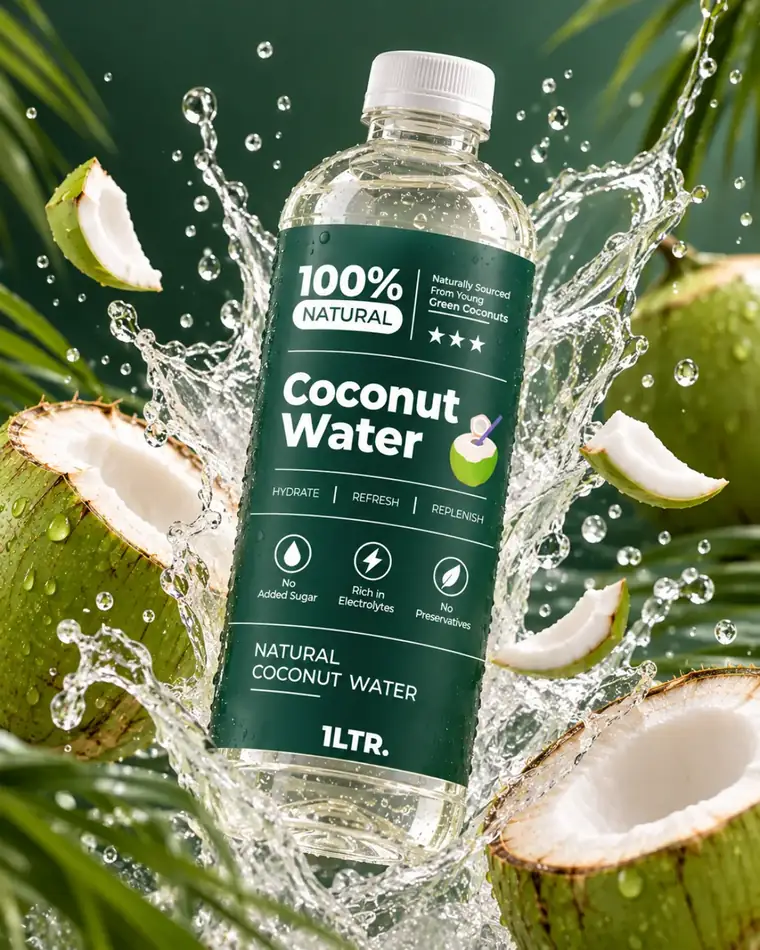

Short workouts may not need a special drink
For many short or moderate sessions, water and normal meals can be enough to replace fluid and nutrients.
Heat and heavy sweating matter
Long sessions, hot weather and high sweat losses can increase fluid and sodium needs. Coconut water contains electrolytes, but its sodium content may differ from purpose-built sports drinks.
Pair hydration with recovery food
Recovery also depends on energy and protein intake, sleep and the rest of the day's meals. A beverage alone does not cover every recovery need.
EVIDENCE NOTE
Use the workout—not the trend—as the starting point
A short, moderate session may need no special beverage. Longer exercise, high heat and heavy sweating can change fluid and sodium needs, while recovery also depends on food, rest and the individual.
EVIDENCE NOTE
Do not treat it as clinical rehydration
Coconut water is a beverage, not a treatment for severe dehydration, persistent vomiting or illness. Symptoms of significant dehydration need appropriate medical assessment.
FREQUENTLY ASKED QUESTIONS
Quick answers.
Can I drink coconut water immediately after exercise?
For most healthy adults it can be consumed as a beverage after exercise, unless a clinician has advised otherwise.
Does it replace a sports drink?
Not always. Sports-drink formulations and coconut water can differ substantially in sodium and carbohydrate content.
Does it contain potassium?
Yes, coconut water naturally contains potassium, though amounts vary.
SOURCES
