
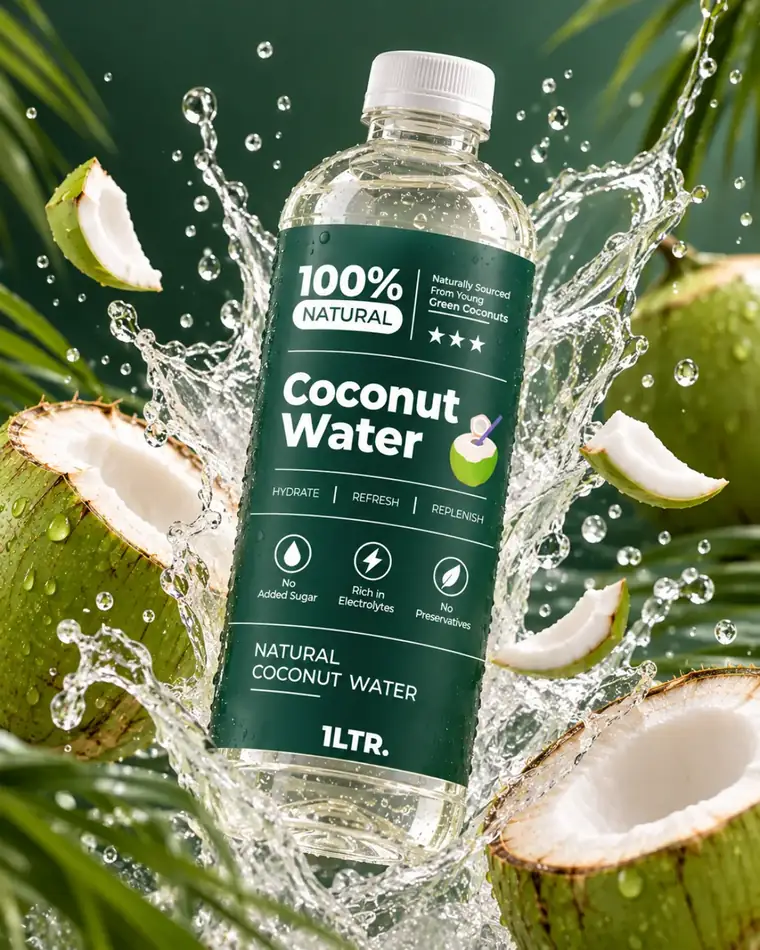
Hydration starts with enough fluid
Coconut water can count toward fluid intake. It is not necessary for everyone to replace plain water with an electrolyte drink.
Exercise changes the context
Longer or more intense exercise, heat and heavy sweating can increase fluid and electrolyte needs. Individual requirements vary, and people with medical conditions should follow clinician guidance.
Avoid treating a beverage as medical therapy
Coconut water should not be presented as a treatment for dehydration caused by illness or as a substitute for medical care. Severe dehydration or persistent symptoms require appropriate medical attention.
EVIDENCE NOTE
What the evidence supports
CDC says water needs vary with activity, climate and individual circumstances, and plain water counts toward daily intake. Mayo Clinic notes that coconut water supplies fluid and electrolytes but is not more hydrating than plain water.
EVIDENCE NOTE
Where product claims stop
Those general observations do not establish the electrolyte content, calories or suitability of a particular CocoDaily pack. Exact product facts must come from its approved label and analysis.
FREQUENTLY ASKED QUESTIONS
Quick answers.
Is coconut water more hydrating than water?
It provides fluid plus electrolytes, but plain water is adequate for many everyday hydration needs.
Is coconut water useful after exercise?
It can be one post-exercise fluid option, especially because it contains carbohydrates and electrolytes, but needs vary with the workout and person.
Who should be careful with potassium-rich drinks?
People who have been told to limit potassium, including some people with kidney disease or certain medications, should follow their clinician's advice.
SOURCES
